
Small vs Medium Used SANY Excavators: A Buyer’s Comparison Guide
Release time: 2026-01-19
Table of Contents
When choosing a used excavator, size often matters more than brand or appearance. For overseas buyers, especially in South America, the Middle East, and Africa, the decision between a small and a medium-sized used excavator can directly affect operating costs, job efficiency, and long-term usability.
Rather than asking which option is “better,” experienced buyers usually ask a more practical question: Which size fits my projects and working conditions?
The Difference in Real-World Terms
Small used excavators are commonly used for light-duty work such as landscaping, utility installation, farm projects, and urban construction where space is limited. Their compact size allows easy transportation and flexible movement on crowded or narrow sites.
Medium used excavators, on the other hand, are typically selected for road construction, infrastructure development, quarry support, and general earthmoving. They offer stronger digging force and higher productivity but require more space and higher operating input.
In real projects, this difference is not theoretical—it shows up every day on job sites.
Advantages of Small Used SANY Excavator
Small used machines are often favored by contractors who prioritize mobility and cost control.
In many South American cities, for example, space constraints and frequent relocation between job sites make compact excavators more practical.
Key advantages
- Lower purchase and transport costs
- Reduced fuel consumption
- Easier operation in confined areas
- Simpler logistics for shipping and unloading
For buyers entering the used equipment market for the first time, small excavators are often seen as a lower-risk investment.
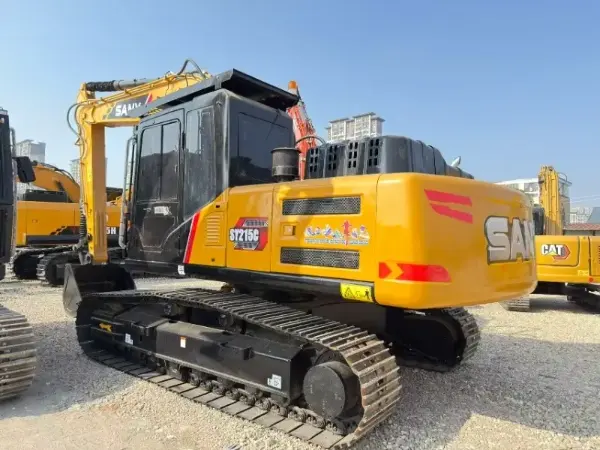
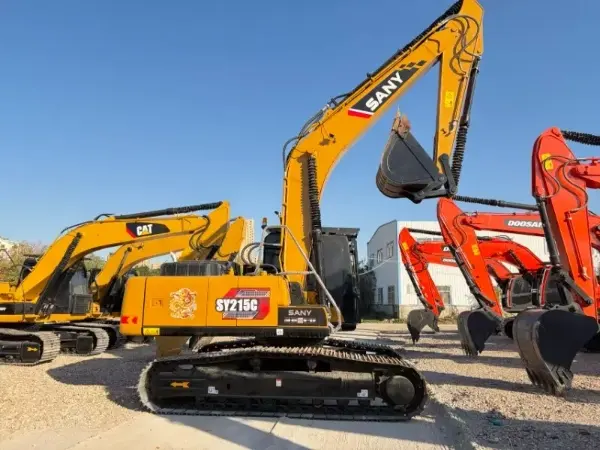
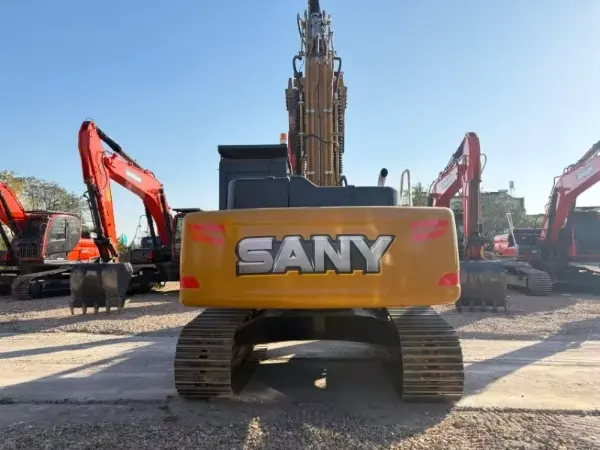
Advantages of a Medium-Used SANY Excavator
Medium-sized used excavators are usually chosen when productivity is the main concern.
In African infrastructure projects or Middle Eastern industrial developments, machines are expected to handle continuous workloads with heavier materials.
Their advantages include:
- Higher digging force and reach
- Better efficiency on large-volume earthmoving
- More stable performance on open job sites
Although operating costs are higher than small machines, many buyers consider the output-to-cost ratio acceptable for larger projects.
Maintenance, Transport, and Local Conditions
Maintenance considerations often influence size selection more than expected. Smaller machines are easier to service in areas with limited equipment support, while medium machines may require better access to parts and experienced technicians.
Transport is another factor. Small excavators are easier to ship and move between sites, while medium excavators demand more planning but offer higher job-site efficiency once deployed.
Understanding local working conditions—climate, terrain, labor skill level—is critical before making a decision.
Real Transactions, Real Deliveries
At Dayi, we focus on exporting machines that are already proven in the market. Recently, we delivered used SANY excavators to:
- South America, supporting road and earthmoving projects
- Middle Eastern countries, mainly for infrastructure and industrial construction
- African markets, where machines are used in mining and public works
Each machine was inspected, tested, and prepared before shipment. Buyers were provided with real photos, videos, and operating records, allowing them to understand exactly what they were purchasing. This transparency is one of the main reasons many clients choose to work with us again.
Used SANY Excavator FAQ
Q1: What models of used SANY excavators are commonly exported?
A: Popular models include SANY 135, 215, 225, and 365, depending on project size and local demand.
Q2: Are the machines inspected before shipment?
A: Yes. Each used SANY excavator is checked for engine performance, hydraulic system condition, structure, and basic operating functions.
Q3: Can used SANY excavators work in hot or harsh environments?
A: Many exported machines are already operating in high-temperature and heavy-duty conditions, especially in the Middle East and Africa.
Q4: How long does shipping usually take?
A: Shipping time depends on destination, but we assist buyers with loading, documents, and logistics planning to ensure smooth delivery.
Q5: Why choose Dayi as a supplier?
A: We focus on real machines, real exports, and real transactions—not just listings.
From export experience at Dayi, buyers who are most satisfied are those who clearly match machine size to application. Problems usually arise not from machine quality but from selecting equipment that does not fit actual job requirements.
Choosing the right size reduces downtime, lowers unexpected costs, and improves long-term project performance.

